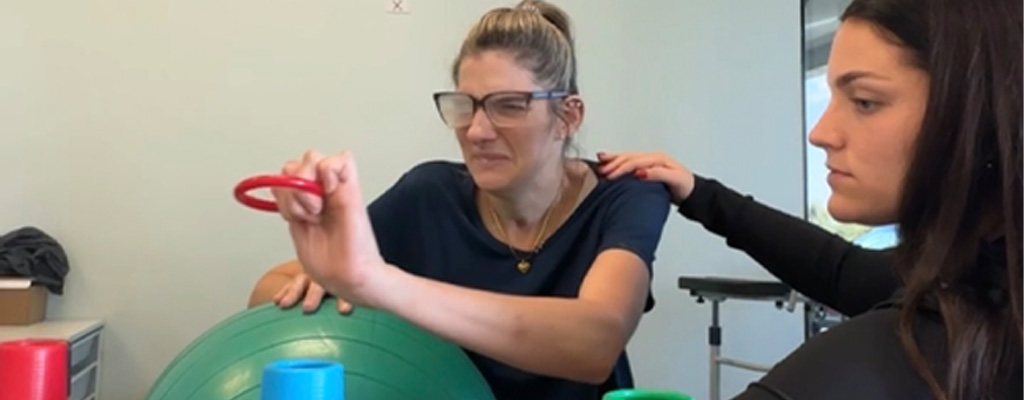

How LSVT BIG and LOUD Can Improve Daily Life
Have you or a loved one recently received a Parkinson’s diagnosis? We know how alarming it can be, especially at first. With Parkinson’s being a progressive disease, you may wonder how long you have until the condition starts to dramatically affect your daily life. Or you might already notice its impact, such as slowed movements or a softer voice.
There is good news, though! While Parkinson’s doesn’t have a cure, targeted therapies can help slow down its progression, helping you live independently for as long as possible. At Advanced Neurologic Rehabilitation, we offer several such therapies, but this month, we want to focus on two specifically: LSVT BIG and LSVT LOUD.
The Story Behind LSVT BIG and LOUD
The LSVT program was first developed in the 1980s. Dr. Lorraine Ramig, a speech-language pathologist, discovered that people with Parkinson’s could speak louder and clearer when therapy focused on retraining how the brain perceives volume. She named this approach the Lee Silverman Voice Treatment after one of her patients.
Later, this basic idea expanded into movement-based therapy focused on helping people with Parkinson’s restore larger, more purposeful movements. This approach became known as LSVT BIG, while the original approach was named LSVT LOUD.
Despite the different names, both programs share the same philosophy: Parkinson’s tricks the brain into underestimating movement and voice levels. By thinking “big” and “loud,” patients can recalibrate their actions to match real-world needs.
Looking at LSVT BIG and LOUD in More Detail
How the Programs Work
Both LSVT therapies are intensive, structured, and focused on functional improvements. They emphasize retraining the brain to recognize and produce movements and speech at normal intensity. However, they have different areas of focus.
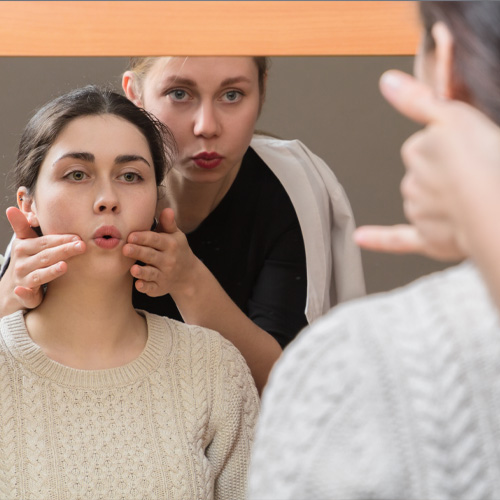
LSVT LOUD
- Helps patients improve vocal loudness and clarity.
- Uses structured voice exercises to strengthen breath support and projection.
- Teaches patients to maintain a stronger voice in everyday conversations.
LSVT BIG
- Focuses on movement and mobility.
- Uses exaggerated, large-amplitude motions to reset motor control.
- Trains patients to take bigger steps and perform movements more confidently.
What To Expect
Both programs follow a consistent format: four weekly sessions for four weeks. We also encourage our patients to integrate exercises into daily routines, ensuring that therapy skills carry over into real-life settings.
This high intensity helps reinforce new habits and create lasting change.
Techniques Used In LSVT LOUD
- Sustained voice exercises, such as holding a vowel sound for extended periods.
- Repetition of everyday phrases to build confidence in common conversations.
- Structured practice that transitions from exercises to real-world situations.
Techniques Used in LSVT BIG
- Repetition and intensity that help movements become automatic.
- Full-body, exaggerated movements like reaching, stepping, and bending.
- Functional practice, including tasks like walking across a room, dressing, or writing.
Three Reasons to Consider LSVT BIG and LOUD
1. You’ll have an easier time with daily tasks.
When your movements shrink, everyday tasks become more challenging. Simple movements like buttoning a shirt or grabbing a plate off a high shelf can start to feel impossible. Exaggerating your movements during practice can help make your daily routine smoother.
2. You can stay engaged in your social life.
Even early Parkinson’s symptoms can make social interactions stressful. These programs improve both communication and mobility, helping you feel more comfortable participating in conversations, gatherings, and family activities.
3. You can build long-term independence.
The intensity of LSVT training helps you develop habits that stick. The high-effort approach makes it more likely that you’ll be able to carry those skills into real life, preserving independence for longer.
We’re Here to Help You Live Well with Parkinson’s
Parkinson’s disease presents challenges, but effective therapies can help you adapt so you can continue to live a full, active life. LSVT BIG and LOUD are built on years of research and clinical success, and the Advanced Neurologic Rehabilitation patients who commit to these programs often notice real improvements in speech, movement, and confidence.
If you or a loved one is living with Parkinson’s, schedule an appointment at our clinic. Our therapists have specialized training in LSVT BIG and LOUD and can perform a comprehensive evaluation to better understand how these programs can help you the most.
Let’s move better, speak louder, and feel more confident in everyday life!
Your Success Is Our Priority!
Return to Advanced Neurologic Rehabilitation and Let’s Continue Your Journey to Wellness Together. Schedule Your Appointment Now!
-

“I really enjoyed my time with everyone at Advanced Neurologic Rehabilitation”
With the help of a group of very skilled therapists, my rehab at Advanced Neurologic Rehabilitation in Gilbert was successful. My physical therapists, along with students Savannah and Jesse, and occupational therapists Jennifer Nielsen, Sam Steele, Hailey and Alina my recovery has progressed nicely. In addition, Brianna Waldron, was very helpful with all of my…
–
Michelle R.
-
“Friendly, knowledgeable, and supportive”
I have been at the Gilbert ANR since my Parkinsons diagnoses this past December. These people are great. Friendly, knowledgeable, and supportive. They also have a sense of humor, which I very much appreciate. It’s not possible for me to mention only one, so I’m naming all that I have worked with. Front desk: Briana…
–
Robert W.
-
“I am making good progress!”
The speech therapists are efficient, professional, and compassionate as they administer my exercises and test my capabilities. I am making good progress!
–
Jeff R.
Stories of Real Life Change
Healing Looks Different For Everyone
Every journey at Advanced Neurologic Rehabilitation begins with hope and continues with heart. Our patients have found strength, regained skills, and reconnected with the life they love, and their words say it best.
Follow Us on Social Media!


Enjoy the juicy flavor of Greek-inspired turkey burgers blended with fresh spinach and Mediterranean spices. Healthy, hearty, and full of flavor, they’re a perfect twist on the classic burger night.
Enjoy This Seasonal Healthy Recipe!
Greek Turkey Burgers with Spinach
- 1 cup frozen chopped spinach, thawed
- 1 lb 93% lean ground turkey
- ½ cup crumbled feta cheese
- ½ tsp garlic powder
- ½ tsp dried oregano
- ¼ tsp salt
- ¼ tsp ground pepper
- 4 small hamburger buns, preferably whole-wheat
- 4 tbsp tzatziki
- 12 slices cucumber
- 8 thick rings red onion (about ¼-inch)
Preheat grill to medium-high. Squeeze excess moisture from spinach. Combine the spinach with turkey, feta, garlic powder, oregano, salt and pepper in a medium bowl; mix well. Form into four 4-inch patties. Oil the grill rack. Grill the patties until cooked through and no longer pink in the center, 4 to 6 minutes per side. (An instant-read thermometer inserted in the center should register 165°F.) Assemble the burgers on the buns, topping each with 1 tablespoon tzatziki, 3 cucumber slices and 2 onion rings.
Clarity Begins with the Right Diagnosis
At Advanced Neurologic Rehabilitation, we believe effective neurological recovery starts with precision. That’s why our diagnostic services are a core part of how we serve you with advanced tools, clinical insight, and a commitment to uncovering the root cause of your symptoms.
What We Offer
- FEES (Fiberoptic Endoscopic Evaluation of Swallowing): A minimally invasive test to visualize swallowing and detect aspiration risk, guiding safer eating and drinking.
- VNG (Videonystagmography): A gold-standard assessment for dizziness, vertigo, and balance disorders by tracking eye movements.
- Functional mobility testing: We evaluate walking, balance, and coordination to see how neurological issues affect your movement.
- Speech, language & cognitive testing: To map communication abilities, cognitive function, and guide therapies.
- Vision & vestibular testing and standardized neurological exams: To evaluate visual disturbances, inner-ear balance systems, and overall neurological function over time.
How Diagnostic Services Help You
- They lead to accurate identification of neurological issues, distinguishing among conditions with overlapping symptoms (e.g. dizziness, weakness, speech changes).
- They set a baseline allowing us to track changes and improvement over time.
- They enable personalized treatment planning, targeting interventions based on your unique profile, not just a best guess.
- They help us detect complications early, improving safety and outcomes.
- They provide you and your family with peace of mind by knowing exactly what’s going on and how we plan to help.
Whether you’re recovering from stroke, concussion, Parkinson’s disease, multiple sclerosis, or dealing with dizziness, swallowing difficulties, balance challenges, or any complex neurological issue, our diagnostic services help lay the roadmap for your return to function.
Start your journey toward clarity and progress. Contact us today to schedule a diagnostic evaluation and take the first step toward a confident, personalized plan.
Exercise of the Month
STRAIGHT LEG RAISE
Lie on your back on a mat with both knees comfortably bent. Straighten the knee you wish to exercise. While keeping your knee straight, lift your leg up to the height of your opposite knee (45 degrees from the ground). Hold for 2 seconds. Slowly lower your leg back down.
2 Sets, 10 Reps.

New Year, New Benefits
As the year draws to a close, now is a perfect time to check your health plan status. Most insurances will reset on January 1, meaning your benefits have renewed.
If you’ve been putting off therapy, rehabilitation, or follow-up visits, now is the moment to get ahead and reserve your spot.
Don’t let your benefits go unused. Schedule your appointment today to make sure you start the new year strong .
November Word Scramble
nrbareycr
tfuisngf
ouoarncpic
iamylf
drapea
altkunhf
Answer Key
cranberry
stuffing
cornucopia
family
parade
thankful