Two Specialized Programs for Parkinson’s Patients
One of the most profound ways Parkinson’s disease impacts day-to-day life is through changes in movement quality. Over time, the movements needed for everyday activities become smaller and slower. Walking turns to shuffling. An item in a cupboard seems much farther away than it used to. And as a result, things just start to seem harder.
Fortunately, targeted rehabilitation can help slow these effects. At Advanced Neurologic Rehabilitation, we offer two specialized programs just for Parkinson’s patients: LSVT BIG and PWR! (Parkinson Wellness Recovery). Both focus on retraining the brain and body to move with greater size, strength, and confidence.
Why High-Amplitude Movement Matters For Parkinson’s Disease
The smaller movements that mark Parkinson’s disease are known medically as hypokinesia. They occur because the disease affects the parts of the brain that control how large your movements should be and help regulate automatic movement patterns.
Hypokinesia is actually one of the hallmark symptoms of Parkinson’s, causing patients to:
- Take shorter steps
- Swing their arms less when walking
- Have a harder time reaching for objects
- Have difficulty turning
- Move more slowly during daily activities
However, many people who develop these symptoms don’t realize that their movements have become smaller. To them, movement feels as it always did, even though it appears reduced to others.
High-amplitude movement training programs, including LSVT BIG and PWR!, address this problem directly. These programs help you practice movements that are intentionally larger than what feels normal. Over time and with intense, repetitive practice, your brain recalibrates its perception of movement size.
A Closer Look at Our Two Parkinson’s Programs
LSVT BIG: Training Bigger Movements
LSVT BIG is a specialized physical and occupational therapy program developed specifically for people with Parkinson’s disease. It’s an offshoot of LSVT LOUD, a speech therapy program designed to increase vocal loudness through structured exercises and practice. BIG applies the same principles used to improve vocal volume to movement.
The program is built around one central principle: think BIG.
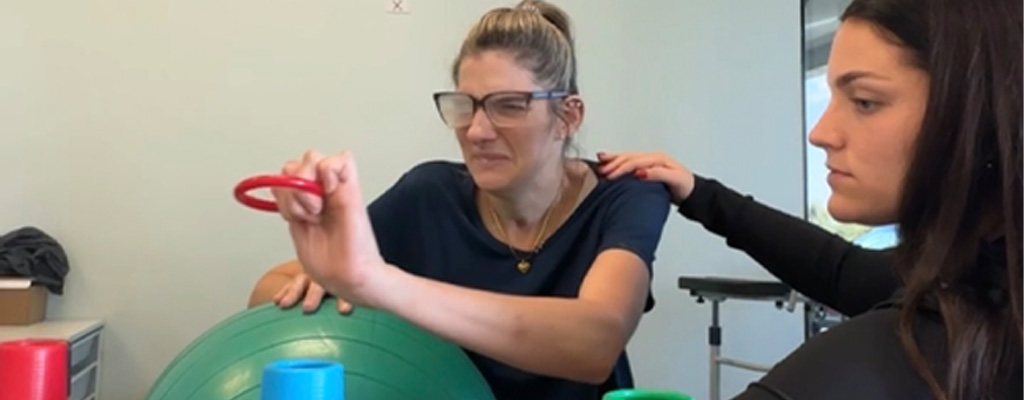
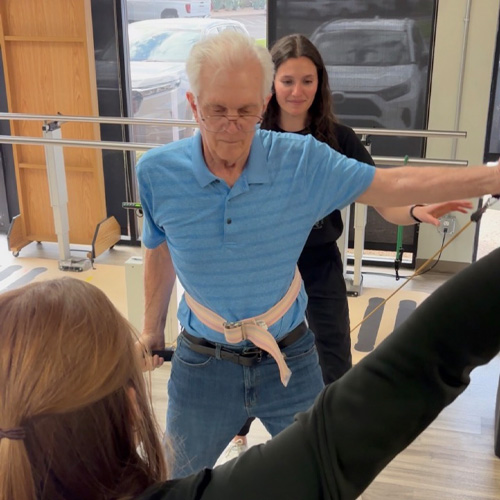
During your sessions, you’ll practice large, exaggerated movements while working through structured exercises and functional tasks. These movements help retrain your brain to overcome the smaller, slower motions that often develop with Parkinson’s disease.
BIG sessions are intentionally designed to be intensive and repetitive, as this approach helps reinforce new movement patterns and encourages lasting carryover into everyday life.
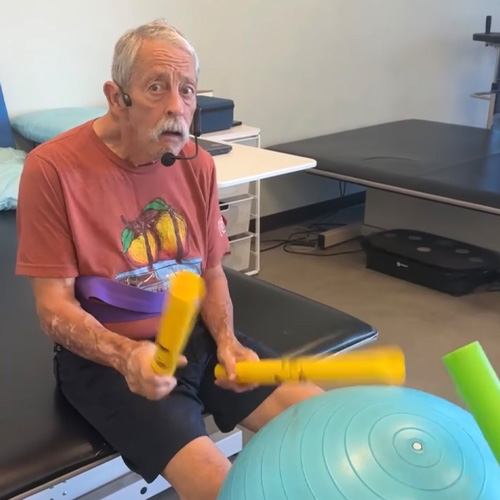
Some of the activities we might work on include:
- Walking with longer strides
- Improving posture
- Reaching overhead
- Getting in and out of a chair
- Turning safely
PWR! Moves: Building Better Daily Movement
We also offer PWR! At Advanced Neurologic Rehabilitation, which focuses on maintaining and improving movement quality overall. Like the BIG program, it uses functional exercises that can be applied to everyday activities, such as walking through busy spaces, climbing stairs, or participating in your favorite hobbies.
PWR! training is centered around four foundational movement patterns:
PWR! Up
PWR! Rock
PWR! Twist
PWR! Step
Where BIG focuses on movement size directly, PWR helps you incorporate larger, more purposeful movements into daily routines. It also encourages you to stay active, which is critical for managing Parkinson’s symptoms over time.

Find the Potential in Every Movement
At Advanced Neurologic Rehabilitation, we know living with Parkinson’s disease can be challenging. However, programs like LSVT BIG and PWR! are specially designed with your needs in mind. Through intensive practice, individualized treatment, and evidence-based strategies, many of our patients can slow the progression of the diseases while improving their mobility, confidence, and independence.
If Parkinson’s disease is affecting your daily life or the life of a loved one, these programs can help. Schedule an appointment with us today to learn more about our targeted approach to Parkinson’s care.
Your Success Is Our Priority!
Return to Advanced Neurologic Rehabilitation and Let’s Continue Your Journey to Wellness Together. Schedule Your Appointment Now!
-

“I really enjoyed my time with everyone at Advanced Neurologic Rehabilitation”
With the help of a group of very skilled therapists, my rehab at Advanced Neurologic Rehabilitation in Gilbert was successful. My physical therapists, along with students Savannah and Jesse, and occupational therapists Jennifer Nielsen, Sam Steele, Hailey and Alina my recovery has progressed nicely. In addition, Brianna Waldron, was very helpful with all of my…
–
Michelle R.
-
“Friendly, knowledgeable, and supportive”
I have been at the Gilbert ANR since my Parkinsons diagnoses this past December. These people are great. Friendly, knowledgeable, and supportive. They also have a sense of humor, which I very much appreciate. It’s not possible for me to mention only one, so I’m naming all that I have worked with. Front desk: Briana…
–
Robert W.
-
“I am making good progress!”
The speech therapists are efficient, professional, and compassionate as they administer my exercises and test my capabilities. I am making good progress!
–
Jeff R.
Stories of Real Life Change
Healing Looks Different For Everyone
Every journey at Advanced Neurologic Rehabilitation begins with hope and continues with heart. Our patients have found strength, regained skills, and reconnected with the life they love, and their words say it best.
Why Sleep is Your Secret Weapon for Recovery
When it comes to recovery, what happens outside the clinic is sometimes just as important as what happens during your sessions. And one of the most important things you can do on your own is to get good quality sleep.
Why Sleep Matters for Recovery
While we often think of sleep as downtime, it’s actually an active process that helps the brain and body recover from the day’s activities.
During deep sleep, your brain activates a process that helps remove cellular waste that builds up throughout the day. This supports brain health and helps maintain healthy nerve function.
However, sleep is also when the brain strengthens and stores new information, such as improved walking patterns or enhanced balance and coordination. High-quality sleep helps your brain reinforce what you worked on in rehab that day, making it easier for you to reach your goals.

Five Tips for Better Sleep
1.
2.
3.
4.
5.
Make Sleep Part of Your Recovery Plan
Recovery doesn’t stop when your therapy session ends–or even when you go to bed. The hours you spend sleeping give your brain an opportunity to strengthen new skills, support healing, and prepare for tomorrow’s challenges.
If you’re curious to learn more about maximizing the outcomes of your rehabilitation, reach out to the team at [stie-name]. We’re here to help you build healthy habits that support better function, greater independence, and long-term success.
Follow Us on Social Media!

Exercise of the Month
FIGURE 4 BRIDGE
Begin on your back. Bend your knees and keep your back flat on the ground. Cross one leg over the other so that your legs make a “4”. Gently, contract your abdominals and hold to keep your back flat as you move up into the bridge position. Remember to breathe. Gently, squeeze your butt muscles and lift your hips off the ground. The goal is to have your hips aligned with your knees and shoulders.
3 Sets, 10 Reps.

Thank you for subscribing to
Advanced Neurologic Rehabilitation

Stay Active Without Overheating
Put the cool factor back into your workout routine this summer. Staying hydrated, listening to your body, and making a few smart adjustments can help you exercise safely while continuing to build strength, endurance, and overall fitness.
Cool Down Before You Start
Hop into a cold shower before exercising. Research suggests a pre-workout cooldown can lower your heart rate and body temperature, helping you perform better in hot weather.
Choose Cooler Routes
Walk, run, or cycle on dirt and gravel paths whenever possible. These surfaces absorb less heat than asphalt and concrete, making outdoor workouts feel much more comfortable.
Use Cooling Essential Oils
A few drops of peppermint or eucalyptus oil on your neck and temples can create a refreshing cooling sensation while helping open nasal passages during humid conditions.
Train Smarter With Intervals
Maintain conditioning by exercising at a slightly easier pace while adding short 30-second bursts of speed every few minutes for an efficient workout.
Refuel With Fruit
Watermelon, grapes, cantaloupe, and honeydew contain over 80% water, making them excellent post-workout snacks for hydration and recovery.
Hydrate Consistently
One of the most important summer fitness habits is staying hydrated before, during, and after exercise to help prevent fatigue, overheating, and muscle cramps.
Make Summer Your Strongest Season Yet
With the right preparation and a few heat-smart strategies, you can continue exercising safely throughout the summer while enjoying all the benefits of an active lifestyle.