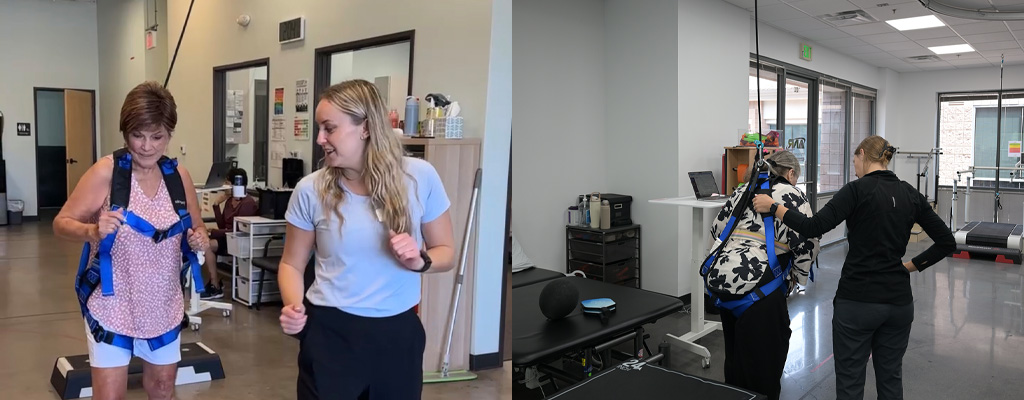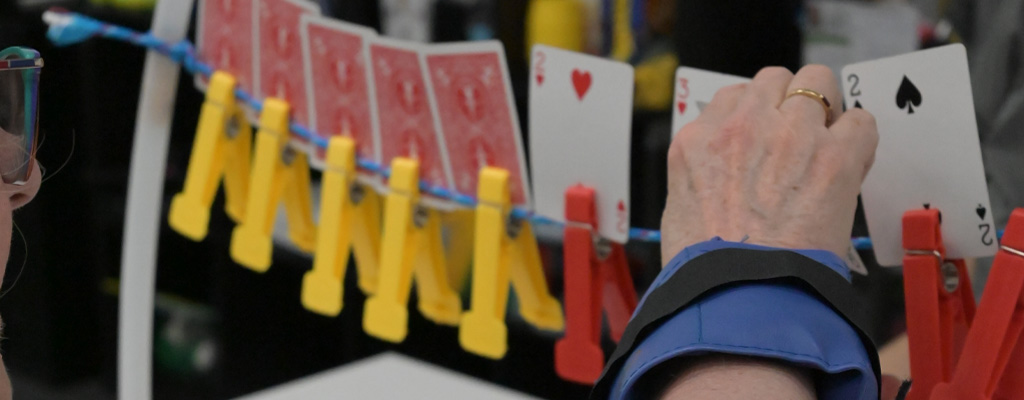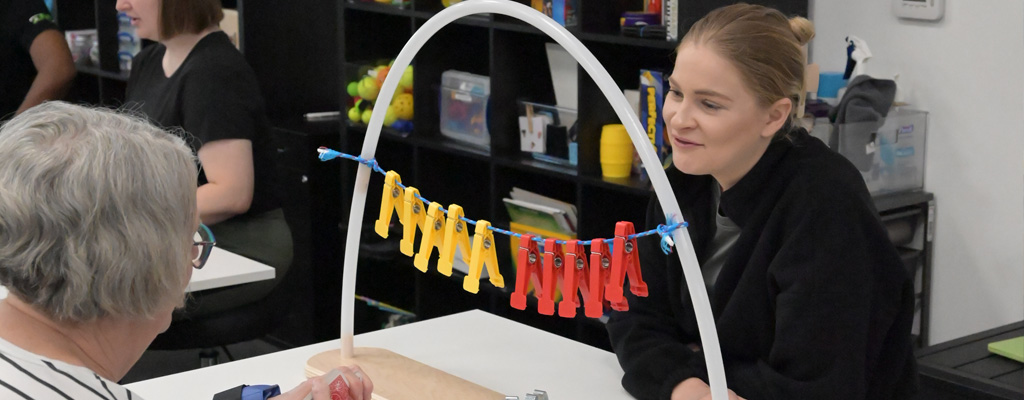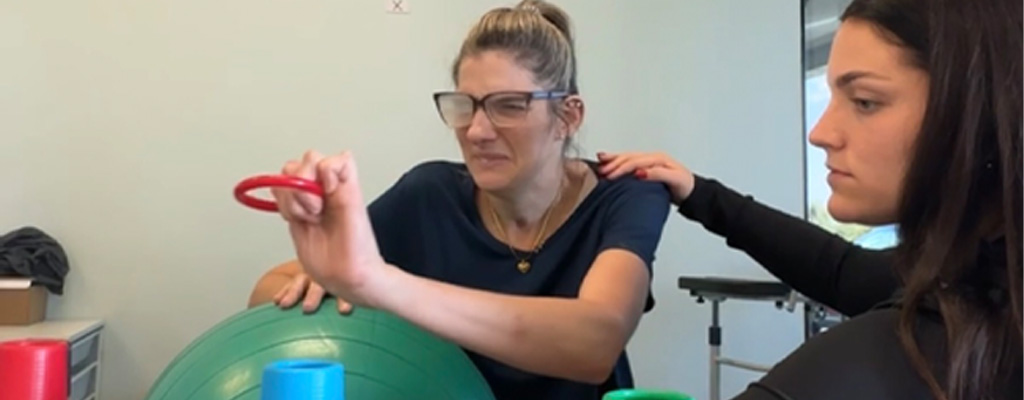
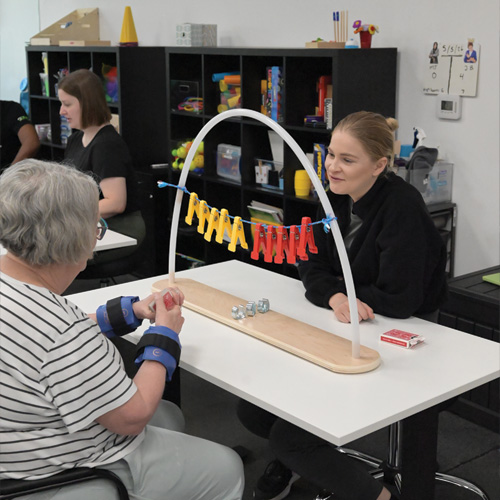
If you’ve watched a loved one relearn to walk or button a shirt after a stroke, then you’ve seen just how remarkable the human brain can be. At first, even those small milestones can seem impossible. But over time, the brain adapts and learns until impossible tasks are second nature.
This process, known as neuroplasticity, forms the foundation of the work the Advanced Neurologic Rehabilitation team does with people recovering from neurological injuries or conditions. It’s what helps patients rebuild skills, regain independence, and discover what’s possible one step at a time.
A Closer Look at Neuroplasticity
Your brain isn’t permanently fixed. In fact, it continually adjusts to new experiences by forming and strengthening connections between nerve cells, which allows it to reorganize itself after injury, illness, or even just changes in activity. This is called neuroplasticity.
It’s especially important when the brain has suffered damage after a stroke or traumatic brain injury (TBI). Nearby healthy areas of the brain can gradually learn to take over for the damaged parts, which is how stroke or TBI survivors can restore essential skills. The process just takes time, plenty of practice, and the right type of therapy.
Three Ways Neuroplasticity Can Help You Recover
Different neurological conditions affect the brain and nervous system in different ways, which is why our team personalizes rehabilitation based on each person’s unique goals and challenges. Let’s take a look at three examples of how neuroplasticity supports recovery at Advanced Neurologic Rehabilitation.
1. Rebuilding Daily Activity After a Stroke
2. Restoring Skills After a Traumatic Brain Injury
3. Improving Mobility With Parkinson's Disease
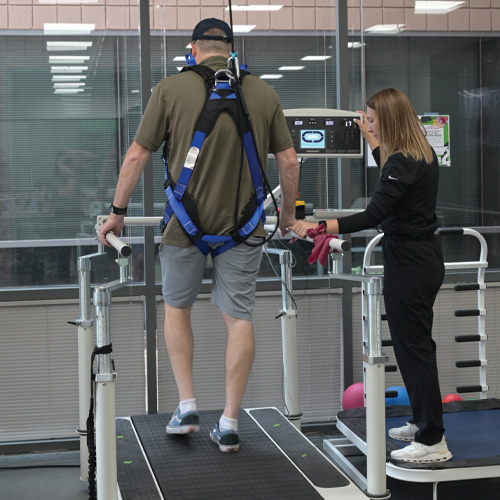
Discover What’s Possible at Advanced Neurologic Rehabilitation
It’s important to remember that neuroplasticity doesn’t happen overnight, which is why our team focuses on steady, long-term progress. Repetition and consistency are key, and initial improvements will seem small at first. However, those small improvements form the foundation for larger functional gains over time.
Think of it this way: every successful repetition gives the brain another opportunity to reinforce healthier movement and communication patterns.
If you or someone you love is living with a neurological condition or injury, the Advanced Neurologic Rehabilitation team offers specialized neurological rehabilitation designed to help you make the most of your brain’s remarkable ability to adapt. Schedule an appointment with us today to learn more.
Your Success Is Our Priority!
Return to Advanced Neurologic Rehabilitation and Let’s Continue Your Journey to Wellness Together. Schedule Your Appointment Now!
October is National Physical Therapy Month, a time to recognize the important role physical therapists play in helping people move forward, especially those living with neurological conditions or chronic health challenges.
For individuals managing conditions such as stroke, multiple sclerosis, Parkinson’s disease, balance disorders, or other neurological conditions, progress may look different for everyone. Physical therapy can help address changes in strength, balance, coordination, mobility, endurance, and confidence, while supporting each person’s ability to participate in the activities that matter most to them.
At Advanced Neurologic Rehabilitation, we believe therapy is about more than treating a diagnosis. It is about understanding the individual, identifying meaningful goals, and finding ways to build function and independence over time.
This National PT Month, we’re proud to recognize the physical therapists and rehabilitation professionals who help patients navigate challenges, celebrate progress, and keep moving toward what matters most.
-

“I really enjoyed my time with everyone at Advanced Neurologic Rehabilitation”
With the help of a group of very skilled therapists, my rehab at Advanced Neurologic Rehabilitation in Gilbert was successful. My physical therapists, along with students Savannah and Jesse, and occupational therapists Jennifer Nielsen, Sam Steele, Hailey and Alina my recovery has progressed nicely. In addition, Brianna Waldron, was very helpful with all of my…
–
Michelle R.
-
“Friendly, knowledgeable, and supportive”
I have been at the Gilbert ANR since my Parkinsons diagnoses this past December. These people are great. Friendly, knowledgeable, and supportive. They also have a sense of humor, which I very much appreciate. It’s not possible for me to mention only one, so I’m naming all that I have worked with. Front desk: Briana…
–
Robert W.
-
“I am making good progress!”
The speech therapists are efficient, professional, and compassionate as they administer my exercises and test my capabilities. I am making good progress!
–
Jeff R.
Stories of Real Life Change
Healing Looks Different For Everyone
Every journey at Advanced Neurologic Rehabilitation begins with hope and continues with heart. Our patients have found strength, regained skills, and reconnected with the life they love, and their words say it best.

Kids Heading Back to School? Prevent Backpack Back Pain
Between laptops, tablets, and textbooks, heavy backpacks are a reality for students heading back to school this fall. When backpacks are worn incorrectly or overloaded, they can contribute to back pain—especially discomfort in the upper back and shoulders.
The good news? A few simple adjustments can help your child stay comfortable, improve posture, and start the school year feeling their best.
A Healthier Backpack Starts With Smart Habits
Proper backpack fit, lighter loads, and good posture habits can reduce unnecessary strain on your child’s growing spine and help prevent aches throughout the school year.
Find the Right Fit
Choose a backpack that fits your child properly. It should sit comfortably against their back and rest near the hips rather than hanging heavily from the shoulders.
Keep It Lightweight
A backpack should not exceed 10% of your child’s body weight. Use a scale to check that books, devices, and supplies are not creating unnecessary strain.
Encourage Good Posture
Teach your child to stand tall by lifting their chest upward and keeping their spine aligned for healthier posture throughout the day.
Follow Us on Social Media!
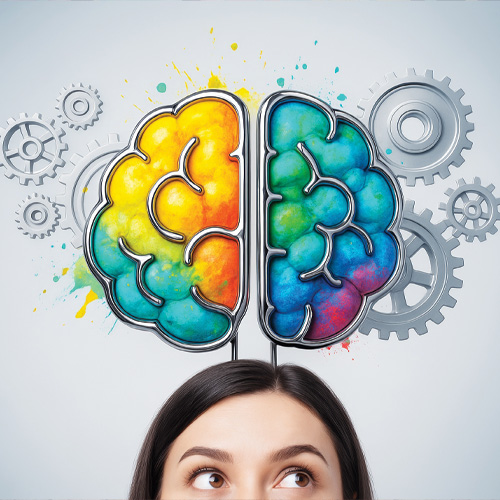
Practice Makes Progress: The Importance of Repetition
At Advanced Neurologic Rehabilitation, some of our patients notice that we tend to repeat the same movements and exercises over and over. There’s a good reason for this, and it has to do with how the nervous system learns and relearns skills, particularly after neurological conditions like stroke or brain injury.
Essentially, these conditions can make once-automatic skills feel much more difficult. Repeated practice gives the nervous system opportunities to adapt and reinforce the connections needed to perform those tasks more effectively.
Repetition Helps the Brain Learn and Adapt
Your brain and nervous system have a remarkable ability to adapt and reorganize connections in response to learning, experience, and practice. Repetition is one of the principles that helps drive these changes.
Each time you practice a meaningful task, your brain receives information about what happened and how the movement was performed. With enough practice, neural pathways involved in that skill can become more consistent and efficient.
That ability is crucial in neurological rehabilitation, which is why we use repeated, task-specific practice to work on skills such as:
- Taking steps and changing direction
- Reaching for and handling objects
- Moving from sitting to standing
- Practicing speech sounds, words, or communication strategies
- Completing everyday activities that require coordination
However, we aren’t simply repeating activities just to repeat them. We help you practice these skills in a way that’s specific, meaningful, and appropriate for your abilities, adjusting care as your abilities improve.
Turn Practice Into Progress
Progress in neurological rehabilitation often comes from practicing key skills repeatedly, with the right level of challenge and clinical guidance. The team at Advanced Neurologic Rehabilitation uses this idea of purposeful practice to help our patients work toward meaningful functional goals.
Curious to learn more about how purposeful practice can help you or a loved one work toward greater function and independence? Schedule an appointment today!

Exercise of the Month
ERGONOMIC STRETCH
Sitting for long periods can leave your muscles feeling stiff and your joints tight, leading to aches and reduced mobility. Taking just a minute to do this simple ergonomic stretch at your desk can help relieve tension, improve circulation, and leave you feeling refreshed and ready to tackle the rest of your day.

Ingredients
- 1 (32-ounce) can whole tomatoes, drained
- 1 cup fresh basil leaves
- 4 tablespoons extra-virgin olive oil
- 6 cloves garlic, peeled
- Kosher salt
- Freshly ground black pepper
- 2 large French baguettes, sliced into 1-inch slices (about 36 slices)
- 1½ pounds fresh mozzarella cheese, sliced ¼-inch thick
Directions
- Preheat oven to 375°F.
- In a food processor, combine the drained tomatoes, basil, olive oil, and 2 garlic cloves. Pulse until smooth but still slightly chunky.
- Season the tomato mixture with kosher salt and freshly ground black pepper.
- Arrange the baguette slices on a baking sheet and toast for about 3 minutes.
- Rub the toasted side of each slice with the remaining garlic cloves.
- Top each slice with a piece of fresh mozzarella and return to the oven for about 45 seconds, just until the cheese softens.
- Spoon about 1 tablespoon of the tomato mixture onto each slice.
- Transfer to a serving platter, garnish with fresh basil leaves, and serve immediately.