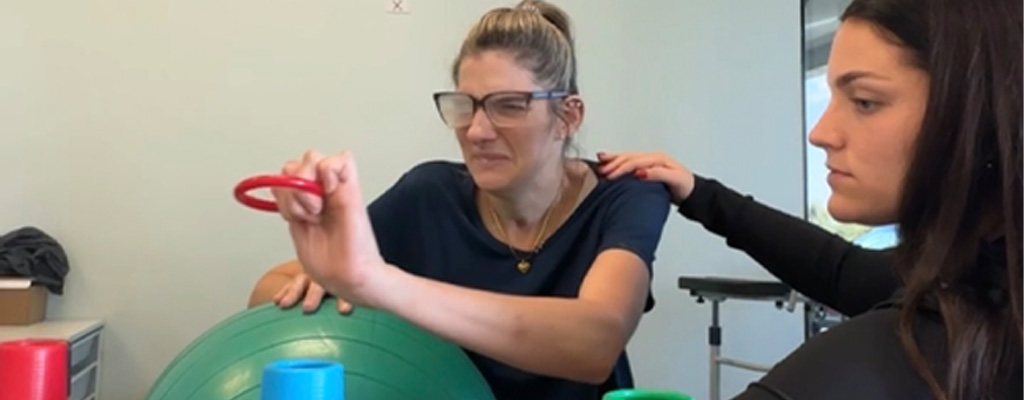
You’ve been working to improve the strength of your legs and core, knowing that they play an important role in maintaining balance. But you still experience bouts of dizziness or unsteadiness, despite making steady strength gains.
At Advanced Neurologic Rehabilitation, we get how frustrating this can be. While strength training can be an important part of improving balance, sometimes you have to address other factors, too.
Vision is one of those factors. The visual system is a primary driver of balance. The brain relies on clear visual input to guide balance, so when something’s off with vision, balance problems can follow. Fortunately, our team specializes in vision therapy, a comprehensive approach that can help you feel steadier on your feet.
A Closer Look at How Vision Affects Balance and Stability
Balance is a surprisingly complex skill that depends on three parts of your body working together to send messages to the brain:
- Your eyes
- Your inner ear, which senses motion
- Your muscles and joints, which tell your brain where your body is
If one of these systems becomes disrupted, the brain doesn’t receive the messages it needs to keep you balanced. When it comes to balance issues, we often hear about problems with the inner ear or muscle weakness, but vision challenges can go overlooked.
Key Visual Skills That Support Balance
Drink Water Consistently
Focus During Movement
Depth Awareness
Side Vision
How Vision Therapy Improves Balance and Reduces Dizziness
When a patient comes to Advanced Neurologic Rehabilitation struggling with balance, the first thing our team will do is determine the underlying cause of their difficulties so we can provide the proper care. We then build a plan that targets specific deficits and supports functional goals. For vision-related dizziness, we typically recommend vision therapy to help the brain process visual input.
Vision therapy uses structured exercises to improve coordination between the eyes, brain, and body. Several visual exercises can improve balance, reduce dizziness, and support functional mobility.
Common Vision Therapy Techniques
Gaze Stabilization Training
- You’ll focus on a target while moving your head, which helps fine-tune the connection between your eyes and your balance centers, reducing dizziness during daily movement.
Smooth Pursuit Training
- You’ll track a moving object with your eyes to improve visual tracking and control. Better tracking supports safer walking and turning.
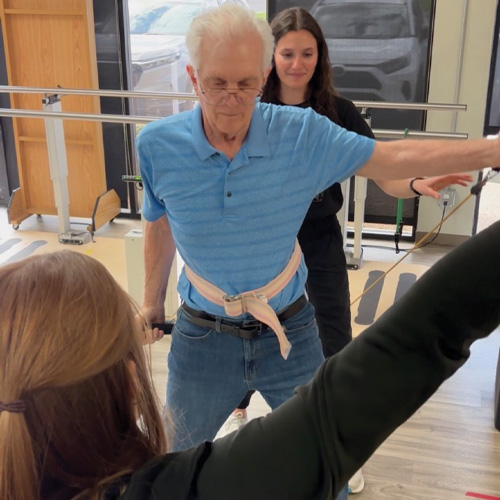
Saccadic Eye Movements
- You’ll quickly shift your focus between two targets to improve reaction time and visual accuracy. This exercise is particularly helpful if you struggle to navigate through busy environments.
Convergence Training
- You’ll focus on objects that move toward the nose, helping improve near vision and coordination.
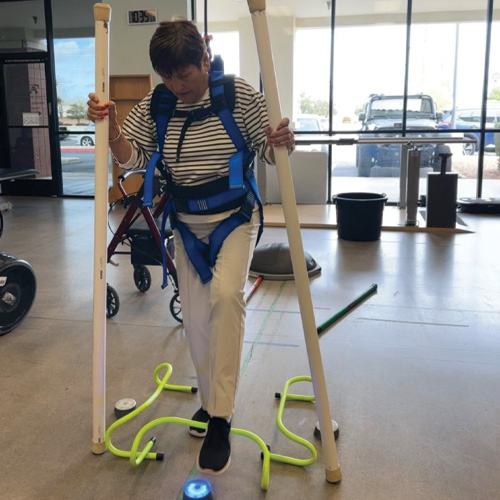
Balance with Visual Challenges
- You’ll perform balance tasks while tracking objects or moving the head. This approach integrates vision with posture and movement, helping to improve real-world stability.
How Vision Therapy Improves Function
Vision therapy improves how the brain processes movement and position, enabling it to make faster, more accurate adjustments. As with all of our care plans, we’ll gradually progress you through these exercises so your brain can adapt without triggering intense symptoms.
After working through a vision therapy program, many of our patients experience:
- Reduced dizziness during walking
- Improved dynamic stability and confidence with movement
- Better stability on uneven surfaces
- Clearer vision during head movement
- Increased safety with daily activities
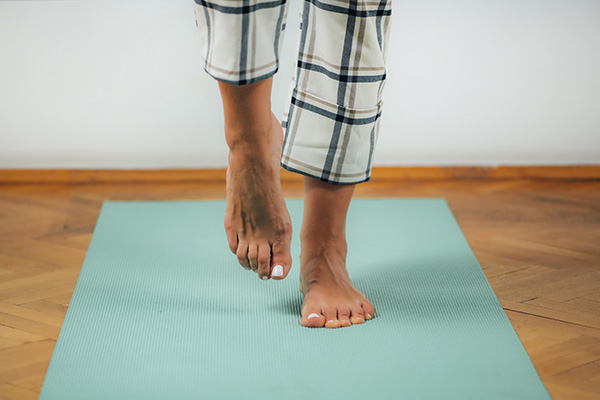
When Clear Vision Meets Confident Movement
There are many reasons why someone might struggle with balance. If you’ve ruled out inner ear concerns or lower body weakness, it may be time to work on improving the input your brain receives from your eyes. Vision therapy at Advanced Neurologic Rehabilitation provides a structured way to retrain this system.
One of our therapists will work closely with you to identify the cause of dizziness and unsteadiness. From there, we’ll provide targeted care that addresses vision, balance, and movement together.
Contact us today to schedule an evaluation and start improving stability with a focused plan.
Your Success Is Our Priority!
Return to Advanced Neurologic Rehabilitation and Let’s Continue Your Journey to Wellness Together. Schedule Your Appointment Now!
-

“I really enjoyed my time with everyone at Advanced Neurologic Rehabilitation”
With the help of a group of very skilled therapists, my rehab at Advanced Neurologic Rehabilitation in Gilbert was successful. My physical therapists, along with students Savannah and Jesse, and occupational therapists Jennifer Nielsen, Sam Steele, Hailey and Alina my recovery has progressed nicely. In addition, Brianna Waldron, was very helpful with all of my…
–
Michelle R.
-
“Friendly, knowledgeable, and supportive”
I have been at the Gilbert ANR since my Parkinsons diagnoses this past December. These people are great. Friendly, knowledgeable, and supportive. They also have a sense of humor, which I very much appreciate. It’s not possible for me to mention only one, so I’m naming all that I have worked with. Front desk: Briana…
–
Robert W.
-
“I am making good progress!”
The speech therapists are efficient, professional, and compassionate as they administer my exercises and test my capabilities. I am making good progress!
–
Jeff R.
Stories of Real Life Change
Healing Looks Different For Everyone
Every journey at Advanced Neurologic Rehabilitation begins with hope and continues with heart. Our patients have found strength, regained skills, and reconnected with the life they love, and their words say it best.
Don’t Let the Arizona Heat Catch Up With You This Summer!
Our summers can be brutal, and for people with neurological disorders, the heat isn’t just uncomfortable in and of itself. It can also worsen symptoms such as dizziness, fatigue, or difficulty focusing. Often, these concerns stem from a single issue: low hydration.
Why Summer Can Be Harder For Those With Neurological Conditions
The brain depends on proper hydration to send clear signals. When you become dehydrated, that process gets disrupted.
While everyone will have a harder time functioning when dehydrated, neurologic patients, such as those with stroke, Parkinson’s disease, or multiple sclerosis, often have a higher sensitivity to it. Their nervous system already works harder to control movement, balance, and focus, so dehydration can have a much greater impact.
For example, the brain struggles to regulate body temperature and blood pressure when fluid levels drop. This strain can increase fall risk and reduce overall function.

Simple Strategies to Stay Hydrated
Drink Water Consistently
Use Visual Reminders
Eat Water-Rich Foods
Limit Heat Exposure
Monitor Urine Color
Stay Ahead of Dehydration This Summer
Hydration supports brain function, balance, and daily performance, but being mindful of your fluid intake can make a big difference. And if you’d like more personalized guidance, just reach out to Advanced Neurologic Rehabilitation!
Follow Us on Social Media!

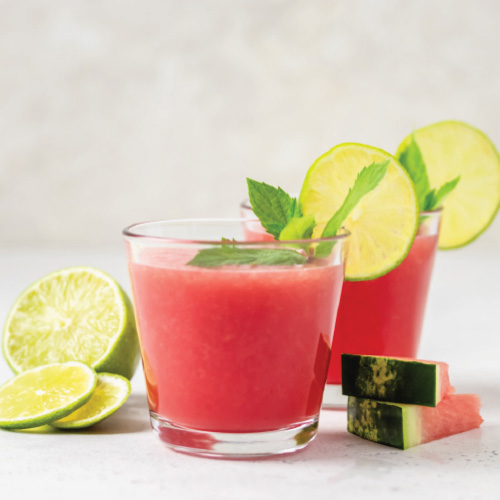
Cool, crisp, and incredibly refreshing, this Watermelon Cucumber Lime Refresher is the perfect way to beat the heat and stay hydrated. With its bright, zesty flavor, it’s a simple drink that feels like a mini summer escape in every sip.
Enjoy This Seasonal Healthy Recipe!
Watermelon Cucumber Lime Refresher
- 3 cups watermelon, cubed
- ½ cucumber, diced
- 2 limes, juiced
Add the watermelon, cucumber, and lime juice to a blender, and blend until smooth. Using a mesh strainer, strain the juice over a large liquid measuring cup to remove the pulp. Use a spoon to help stir the pulp and press out the liquid. (Reserve the pulp to make pulp muffins!)
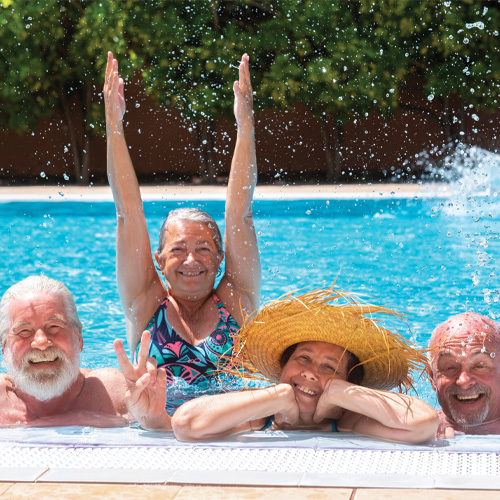
Prepare to Swim in the Water Safely
Swimming is a great way to stay active and cool as the weather warms up. However, it’s essential to take the necessary steps to ensure that you’re safe in the water. Check out these important swimming safety tips before heading out to the beach or pool this summer!
Ensure That A Lifeguard Is Present As You Swim
Having a trained lifeguard watching over you at the pool or beach is a must. A lifeguard can prevent you from sustaining a severe injury or drowning and can generally ensure that you’re following the best practices for swimming.
Swim With A Buddy
Not only is swimming with a friend a great way to stay safe, it’s also more fun! Swimming with a buddy can also help you hold yourself more accountable and stay determined as you progress through your laps.
Never Leave A Child Unattended
It is essential to make sure your child never swims alone– this is how accidents happen. Teach your children to ask permission before going in the water, and let them know that an adult should always be there to supervise them.
Drink Plenty Of Water
It can be easy to get dehydrated under the hot sun, even if you are in a cool and refreshing body of water. Remember to drink plenty of liquids and avoid dehydrating drinks with excess caffeine.
Wear Your Sunscreen
Invest in a quality waterproof sunscreen with a high SPF to protect your skin from the sun’s harsh rays. Wearing sunscreen can make a massive difference in the fight against skin cancer and can help you avoid painful burns.
Exercise of the Month
ONE LEG BALANCE
Single-leg balance is essential for improving stability and walking (gait), as we briefly stand on one leg with every step. Strengthening this position can help reduce fall risk and improve confidence with movement. Stand with your hands on the back of a chair, countertop, or wall for support. Slowly lift one foot so your weight is on the opposite leg. Keep your posture tall and steady. Hold for 20–30 seconds and gradually increase time as your balance improves.
2 Sets, 1 Rep (each side) (Materials needed: chair)
June Word Scramble
brerireastws
aaointcv
unesecnsr
emrmus
dnelomea
iaordungta
Answer Key
strawberries
vacation
sunscreen
summer
lemonade
graduation